
HBOT Chamber for Sale: Portable Options for Clinics and Homes
Hyperbaric Chambers for Sale | Quality Hyperbaric Chamber Solutions
Looking for an HBOT chamber for sale that fits a busy practice or a health-focused home? Below you can find more information about chamber types, pressure ranges, room planning, safety, and support paired with HBOT Revolution’s focus on education, simple protocols, and expert guidance
How Portable Hyperbaric Oxygen Therapy Works
Why Hyperbaric Chambers Are Transforming Wellness
Hyperbaric oxygen therapy places a person inside a sealed oxygen chamber that is pressurized above normal atmospheric levels. Breathing oxygen in this setting increases the amount dissolved in the blood. In portable systems, the experience is quiet and comfortable and can fit a standard treatment room or home gym.
Session basics
Typical session length is 60 to 90 minutes.
Start-up involves a short checklist, pressure ramp-up, steady breathing, and a gradual return to normal pressure.
Clear operator training and simple protocols help teams provide a consistent client experience.
Why portable chambers are popular
Access. Portable units fit rooms that already exist in clinics, studios, and homes.
Flexibility. Options include soft-shell models and hard-shell models so buyers can match pressure, size, and comfort features to their goals.
Ease of use. Intuitive controls and training materials allow staff or families to manage sessions with confidence.
Pressure basics
Pressure is measured in ATA.
Portable soft-shell chambers commonly operate around 1.3 to 1.5 ATA.
Portable hard-shell chambers typically offer progressive settings up to 2.0 ATA.
Choose a system that matches the protocols you plan to offer as well as your team’s experience and applicable regulations.
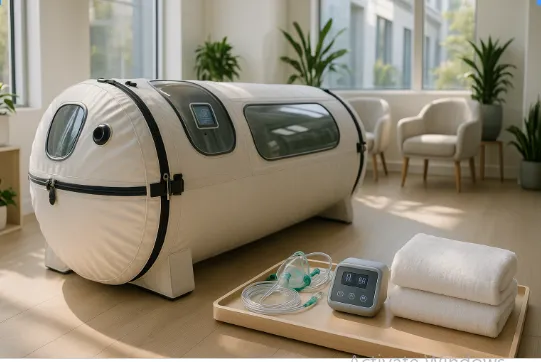
Soft-Shell vs Hard-Shell: Choosing the Right Portable Oxygen Chamber
Both soft-shell and hard-shell chambers deliver the core conditions for hyperbaric oxygen therapy. Selecting the right unit depends on space, budget, intended users, and session types.
Soft-shell portable chambers
Setup and footprint. Light and compact, a good fit for a single treatment room or a spare room at home.
Typical ATA range. Around 1.3 to 1.5 ATA.
Mobility. Easier to move between rooms or locations.
Investment. Lower upfront cost helps clinics validate demand quickly.
Hard-shell portable chambers
Structure. Rigid acrylic or metal housing with precise gauges and controls.
Typical ATA range. Progressive settings up to 2.0 ATA.
Turnaround. Smooth surfaces support quick cleaning in high-use environments.
Positioning. Favored by med spas, plastic surgery centers, and regenerative practices that want broader protocol options within the portable category.
Soft-shell portable chambers
Setup and footprint. Light and compact, a good fit for a single treatment room or a spare room at home [link to: “home hyperbaric oxygen chamber”].
Typical ATA range. Around 1.3 to 1.5 ATA.
Mobility. Easier to move between rooms or locations.
Investment. Lower upfront cost helps clinics validate demand quickly.
Hard-shell portable chambers
Structure. Rigid acrylic or metal housing with precise gauges and controls.
Typical ATA range. Progressive settings up to 2.0 ATA.
Turnaround. Smooth surfaces support quick cleaning in high-use environments.
Positioning. Favored by med spas, plastic surgery centers, and regenerative practices that want broader protocol options within the portable category.
Comfort and usability features to compare
Interior visibility, communication system, and noise profile
Entry and exit design and the space needed for assistance
Seating or reclining options and accessory compatibility
Control placement that makes sense for staff flow
If possible, schedule a showroom tour or workshop to try multiple chamber types side by side. Seeing units in person helps teams confirm fit, finish, and user experience before purchase.
Comfort and usability features to compare
Interior visibility, communication system, and noise profile
Entry and exit design and the space needed for assistance
Seating or reclining options and accessory compatibility
Control placement that makes sense for staff flow
If possible, schedule a showroom tour or workshop to try multiple chamber types side by side. Seeing units in person helps teams confirm fit, finish, and user experience before purchase.
Selection Checklist: Space, Pressure, Workflow, and Budget
Use this framework to move from research to a confident short list.
Goals and users
What outcomes are you targeting, such as recovery support at a studio, post-procedure timelines in a clinic, or routine wellness at home?
Who will use the chamber most often, such as athletes, cosmetic patients, or families?
Pressure and protocols
Confirm the ATA range needed for day-one services, then plan how settings might expand during year two.
Ask for written protocols and training aligned with your pressure range and session lengths.
Room layout and throughput
Measure door widths, floor space, and clearance for hoses, compressors, and oxygen concentrators.
Map the flow from intake to post-session to estimate hourly capacity with one unit versus two.
Consider privacy needs and sound considerations for adjacent rooms.
Safety, cleaning, and maintenance
Review materials, valves, seals, gauges, and emergency depressurization features.
Establish cleaning routines that match chamber materials and expected traffic.
Ask about maintenance intervals and parts availability for high-use settings.
Budget and acquisition path
Compare soft-shell and hard-shell pricing, plus required oxygen supply.
Include accessories such as seating, masks, and monitoring equipment.
Factor in training, protocols, and marketing support if you are launching a new service line.
If you are unsure about demand in a new location, talk to the seller about short-term options or phased purchasing that allows you to scale with real utilization data.
Team training and ongoing support
Look for onboarding, refresher sessions, and access to a support team.
Clear playbooks help staff run repeatable sessions and answer common client questions.
Marketing guidance can shorten the ramp from installation to stable bookings.
Goals and users
What outcomes are you targeting, such as recovery support at a studio, post-procedure timelines in a clinic, or routine wellness at home?
Who will use the chamber most often, such as athletes, cosmetic patients, or families?
Pressure and protocols
Confirm the ATA range needed for day-one services, then plan how settings might expand during year two.
Ask for written protocols and training aligned with your pressure range and session lengths.
Room layout and throughput
Measure door widths, floor space, and clearance for hoses, compressors, and oxygen concentrators.
Map the flow from intake to post-session to estimate hourly capacity with one unit versus two.
Consider privacy needs and sound considerations for adjacent rooms.
Safety, cleaning, and maintenance
Review materials, valves, seals, gauges, and emergency depressurization features.
Establish cleaning routines that match chamber materials and expected traffic.
Ask about maintenance intervals and parts availability for high-use settings.
Budget and acquisition path
Compare soft-shell and hard-shell pricing, plus required oxygen supply.
Include accessories such as seating, masks, and monitoring equipment.
Factor in training, protocols, and marketing support if you are launching a new service line.
If you are unsure about demand in a new location, talk to the seller about short-term options or phased purchasing that allows you to scale with real utilization data.
Team training and ongoing support
Look for onboarding, refresher sessions, and access to a support team.
Clear playbooks help staff run repeatable sessions and answer common client questions.
Marketing guidance can shorten the ramp from installation to stable bookings.
Use Cases That Grow Clinics and Serve Families
Portable hyperbaric chamber programs fit a wide range of settings. Here are common approaches that align with current buyer interest.
Wellness and recovery studio
Position HBOT as a calm, technology-forward session that pairs well with red light therapy, sauna, or compression boots.
Offer memberships and package tiers to keep monthly revenue steady across seasons.
Chiropractic, physical therapy, and sports practices
Integrate HBOT with soft-tissue protocols and injury recovery plans.
Use consistent session templates to simplify scheduling and handoffs.
Med spas and cosmetic practices
Support wound care and help reduce downtime following procedures by matching pressure settings and durations to clinical pathways.
Schedule HBOT before or after treatments to align with follow-up visits.
Dental and regenerative clinics
Coordinate sessions with surgical timelines and design educational materials for patients regarding frequency and expected experience.
Home users
Families install a portable hyperbaric unit in a home gym or spare room for routine wellness.
Training and a simple checklist make daily or weekly use realistic.
Messaging that converts
Families install a portable hyperbaric unit in a home gym or spare room for routine wellness.
Use plain language to explain how HBOT works.
Share photos of the chamber interior so clients understand comfort and visibility.
Highlight ease of booking and predictable session lengths.
Build trust with testimonials and staff spotlights where allowed.
Wellness and recovery studios
Position HBOT as a calm, technology-forward session that pairs well with red light therapy, sauna, or compression boots.
Offer memberships and package tiers to keep monthly revenue steady across seasons.
Chiropractic, physical therapy, and sports practices
Integrate HBOT with soft-tissue protocols and injury recovery plans.
Use consistent session templates to simplify scheduling and handoffs.
Med spas and cosmetic practices
Support wound care and help reduce downtime following procedures by matching pressure settings and durations to clinical pathways.
Schedule HBOT before or after treatments to align with follow-up visits.
Dental and regenerative clinics
Coordinate sessions with surgical timelines and design educational materials for patients regarding frequency and expected experience.
Home users
Families install a portable hyperbaric unit in a home gym or spare room for routine wellness.
Training and a simple checklist make daily or weekly use realistic.
Messaging that converts
Families install a portable hyperbaric unit in a home gym or spare room for routine wellness.
Use plain language to explain how HBOT works.
Share photos of the chamber interior so clients understand comfort and visibility.
Highlight ease of booking and predictable session lengths.
Build trust with testimonials and staff spotlights where allowed.
Pricing, Buying, Setup, and Support
A chamber’s specification sheet tells only part of the story. A successful program also accounts for room readiness, training, and service.
Core cost drivers
1. Chamber type. Soft-shell units carry lower initial costs and fast setup. Hard-shell units cost more and can support broader protocol ranges up to 2.0 ATA.
2. Oxygen supply. Pair the chamber with an appropriate concentrator or oxygen source and confirm filter schedules.
3. Accessories. Consider seating, communication systems, oxygen masks, and monitoring gear that match your session style.
4. Training and protocols. Budget for team training and written workflows. Consistency drives client satisfaction and word-of-mouth.
5. Service and warranty. Ask about response times, parts availability, and recommended maintenance for high-use environments.
Room preparation checklist
Integrate HBOT with soft-tissue protocols and injConfirm dedicated power for the compressor and related equipment.
Plan ventilation paths and safe hose routing.
Provide storage for cleaning supplies and personal items.
Set up a simple pre-session and post-session routine so turnover stays smooth.ury recovery plans.
Use consistent session templates to simplify scheduling and handoffs.
Launch timeline tips
Start with an internal pilot week for staff and close partners.
Refine session scripting, cleaning steps, and photo guidelines.
Put a booking link and first-time special on your website and social channels.
Track early utilization to guide future purchases.
Core cost drivers
1. Chamber type. Soft-shell units carry lower initial costs and fast setup. Hard-shell units cost more and can support broader protocol ranges up to 2.0 ATA.
2. Oxygen supply. Pair the chamber with an appropriate concentrator or oxygen source and confirm filter schedules.
3. Accessories. Consider seating, communication systems, oxygen masks, and monitoring gear that match your session style.
4. Training and protocols. Budget for team training and written workflows. Consistency drives client satisfaction and word-of-mouth.
5. Service and warranty. Ask about response times, parts availability, and recommended maintenance for high-use environments.
Room preparation checklist
Confirm dedicated power for the compressor and related equipment.
Plan ventilation paths and safe hose routing.
Provide storage for cleaning supplies and personal items.
Set up a simple pre-session and post-session routine so turnover stays smooth.
Launch timeline tips
Start with an internal pilot week for staff and close partners.
Refine session scripting, cleaning steps, and photo guidelines.
Put a booking link and first-time special on your website and social channels.
Track early utilization to guide future purchases.

Exploring Hyperbaric Oxygen Therapy: A New Frontier in Treating Erectile Dysfunction
Explore HBOT's role in ED treatment, its mechanisms, success stories, and future potential. ...more
Mens Health
January 02, 2024•18 min read
What to Know before You Buy a Hyperbaric Chamber
Individuals, wellness centers, and medical practices can purchase a hyperbaric chamber. The exact setup depends on where you operate, since local rules and professional guidelines differ. Plan for the paperwork you will need, the room you will use, and the procedures your staff will follow. If you are unsure, ask the vendor to outline the steps so your documentation and day-to-day workflow match local requirements.
Session frequency is not one size fits all. Some clients book a short series, others prefer ongoing maintenance. Start with clear packages that define session length and number of visits. Track how people respond and let your team adjust cadence to meet goals, whether that is recovery after a procedure, athletic training, or general wellness.
Safety comes from consistent habits. Follow the vendor’s maintenance and cleaning schedule. Use only approved materials inside the chamber. Train staff on start-up, shutdown, and emergency depressurization so every operator handles sessions the same way. A simple checklist posted in the room helps keep standards high when the schedule is busy.
Talk with a specialist to match goals, room size, and ATA needs with the right model.
Contact HBOT Revolution
Choosing the right hyperbaric chamber doesn’t have to feel overwhelming. Our specialists provide free consultations to explain chamber types, pressure ranges, and installation requirements in plain language.
Support goes beyond the purchase. We provide:
Personalized advice for home users, clinics, and businesses.
Technical support, troubleshooting, and setup guidance.
Free resources, including safety checklists and therapy best practices.
When you work with HBOT Revolution, you’re not just buying equipment, you’re gaining a partner committed to helping you succeed. From selection to daily use, our team ensures your investment is simple, safe, and
Need help Right Way?
Copyright © 2026 HBOT Revolution USA, All rights reserved
(714)-786-3831
(714)-786-3831
Business Hours:
Monday: Open 24 Hours
Tuesday: Open 24 Hours
Wednesday: Open 24 Hours
Thursday: Open 24 Hours
Friday: Open 24 Hours
Saturday: Open 24 Hours
Sunday: Open 24 Hours
(714)-786-3831
LinkedIn
Facebook
Instagram
Youtube
TikTok