
HBOT Chamber for Sale: Portable Options for Clinics and Homes
Hyperbaric Chambers for Sale | Quality Hyperbaric Chamber Solutions
Looking for an HBOT chamber for sale that fits a busy practice or a health-focused home? Below you can find more information about chamber types, pressure ranges, room planning, safety, and support paired with HBOT Revolution’s focus on education, simple protocols, and expert guidance
How Portable Hyperbaric Oxygen Therapy Works
Why Hyperbaric Chambers Are Transforming Wellness
Hyperbaric oxygen therapy places a person inside a sealed oxygen chamber that is pressurized above normal atmospheric levels. Breathing oxygen in this setting increases the amount dissolved in the blood. In portable systems, the experience is quiet and comfortable and can fit a standard treatment room or home gym.
Session basics
Typical session length is 60 to 90 minutes.
Start-up involves a short checklist, pressure ramp-up, steady breathing, and a gradual return to normal pressure.
Clear operator training and simple protocols help teams provide a consistent client experience.
Why portable chambers are popular
Access. Portable units fit rooms that already exist in clinics, studios, and homes.
Flexibility. Options include soft-shell models and hard-shell models so buyers can match pressure, size, and comfort features to their goals.
Ease of use. Intuitive controls and training materials allow staff or families to manage sessions with confidence.
Pressure basics
Pressure is measured in ATA.
Portable soft-shell chambers commonly operate around 1.3 to 1.5 ATA.
Portable hard-shell chambers typically offer progressive settings up to 2.0 ATA.
Choose a system that matches the protocols you plan to offer as well as your team’s experience and applicable regulations.
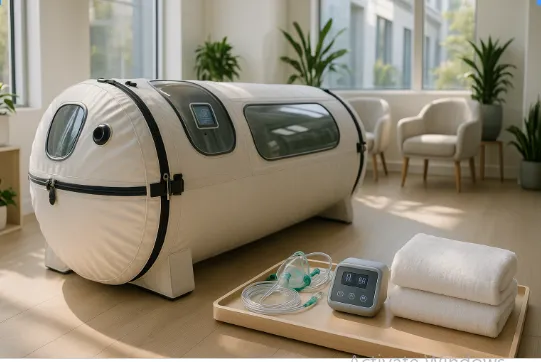
Soft-Shell vs Hard-Shell: Choosing the Right Portable Oxygen Chamber
Both soft-shell and hard-shell chambers deliver the core conditions for hyperbaric oxygen therapy. Selecting the right unit depends on space, budget, intended users, and session types.
Soft-shell portable chambers
Setup and footprint. Light and compact, a good fit for a single treatment room or a spare room at home.
Typical ATA range. Around 1.3 to 1.5 ATA.
Mobility. Easier to move between rooms or locations.
Investment. Lower upfront cost helps clinics validate demand quickly.
Hard-shell portable chambers
Structure. Rigid acrylic or metal housing with precise gauges and controls.
Typical ATA range. Progressive settings up to 2.0 ATA.
Turnaround. Smooth surfaces support quick cleaning in high-use environments.
Positioning. Favored by med spas, plastic surgery centers, and regenerative practices that want broader protocol options within the portable category.
Soft-shell portable chambers
Setup and footprint. Light and compact, a good fit for a single treatment room or a spare room at home [link to: “home hyperbaric oxygen chamber”].
Typical ATA range. Around 1.3 to 1.5 ATA.
Mobility. Easier to move between rooms or locations.
Investment. Lower upfront cost helps clinics validate demand quickly.
Hard-shell portable chambers
Structure. Rigid acrylic or metal housing with precise gauges and controls.
Typical ATA range. Progressive settings up to 2.0 ATA.
Turnaround. Smooth surfaces support quick cleaning in high-use environments.
Positioning. Favored by med spas, plastic surgery centers, and regenerative practices that want broader protocol options within the portable category.
Comfort and usability features to compare
Interior visibility, communication system, and noise profile
Entry and exit design and the space needed for assistance
Seating or reclining options and accessory compatibility
Control placement that makes sense for staff flow
If possible, schedule a showroom tour or workshop to try multiple chamber types side by side. Seeing units in person helps teams confirm fit, finish, and user experience before purchase.
Comfort and usability features to compare
Interior visibility, communication system, and noise profile
Entry and exit design and the space needed for assistance
Seating or reclining options and accessory compatibility
Control placement that makes sense for staff flow
If possible, schedule a showroom tour or workshop to try multiple chamber types side by side. Seeing units in person helps teams confirm fit, finish, and user experience before purchase.
Selection Checklist: Space, Pressure, Workflow, and Budget
Use this framework to move from research to a confident short list.
Goals and users
What outcomes are you targeting, such as recovery support at a studio, post-procedure timelines in a clinic, or routine wellness at home?
Who will use the chamber most often, such as athletes, cosmetic patients, or families?
Pressure and protocols
Confirm the ATA range needed for day-one services, then plan how settings might expand during year two.
Ask for written protocols and training aligned with your pressure range and session lengths.
Room layout and throughput
Measure door widths, floor space, and clearance for hoses, compressors, and oxygen concentrators.
Map the flow from intake to post-session to estimate hourly capacity with one unit versus two.
Consider privacy needs and sound considerations for adjacent rooms.
Safety, cleaning, and maintenance
Review materials, valves, seals, gauges, and emergency depressurization features.
Establish cleaning routines that match chamber materials and expected traffic.
Ask about maintenance intervals and parts availability for high-use settings.
Budget and acquisition path
Compare soft-shell and hard-shell pricing, plus required oxygen supply.
Include accessories such as seating, masks, and monitoring equipment.
Factor in training, protocols, and marketing support if you are launching a new service line.
If you are unsure about demand in a new location, talk to the seller about short-term options or phased purchasing that allows you to scale with real utilization data.
Team training and ongoing support
Look for onboarding, refresher sessions, and access to a support team.
Clear playbooks help staff run repeatable sessions and answer common client questions.
Marketing guidance can shorten the ramp from installation to stable bookings.
Goals and users
What outcomes are you targeting, such as recovery support at a studio, post-procedure timelines in a clinic, or routine wellness at home?
Who will use the chamber most often, such as athletes, cosmetic patients, or families?
Pressure and protocols
Confirm the ATA range needed for day-one services, then plan how settings might expand during year two.
Ask for written protocols and training aligned with your pressure range and session lengths.
Room layout and throughput
Measure door widths, floor space, and clearance for hoses, compressors, and oxygen concentrators.
Map the flow from intake to post-session to estimate hourly capacity with one unit versus two.
Consider privacy needs and sound considerations for adjacent rooms.
Safety, cleaning, and maintenance
Review materials, valves, seals, gauges, and emergency depressurization features.
Establish cleaning routines that match chamber materials and expected traffic.
Ask about maintenance intervals and parts availability for high-use settings.
Budget and acquisition path
Compare soft-shell and hard-shell pricing, plus required oxygen supply.
Include accessories such as seating, masks, and monitoring equipment.
Factor in training, protocols, and marketing support if you are launching a new service line.
If you are unsure about demand in a new location, talk to the seller about short-term options or phased purchasing that allows you to scale with real utilization data.
Team training and ongoing support
Look for onboarding, refresher sessions, and access to a support team.
Clear playbooks help staff run repeatable sessions and answer common client questions.
Marketing guidance can shorten the ramp from installation to stable bookings.
Use Cases That Grow Clinics and Serve Families
Portable hyperbaric chamber programs fit a wide range of settings. Here are common approaches that align with current buyer interest.
Wellness and recovery studio
Position HBOT as a calm, technology-forward session that pairs well with red light therapy, sauna, or compression boots.
Offer memberships and package tiers to keep monthly revenue steady across seasons.
Chiropractic, physical therapy, and sports practices
Integrate HBOT with soft-tissue protocols and injury recovery plans.
Use consistent session templates to simplify scheduling and handoffs.
Med spas and cosmetic practices
Support wound care and help reduce downtime following procedures by matching pressure settings and durations to clinical pathways.
Schedule HBOT before or after treatments to align with follow-up visits.
Dental and regenerative clinics
Coordinate sessions with surgical timelines and design educational materials for patients regarding frequency and expected experience.
Home users
Families install a portable hyperbaric unit in a home gym or spare room for routine wellness.
Training and a simple checklist make daily or weekly use realistic.
Messaging that converts
Families install a portable hyperbaric unit in a home gym or spare room for routine wellness.
Use plain language to explain how HBOT works.
Share photos of the chamber interior so clients understand comfort and visibility.
Highlight ease of booking and predictable session lengths.
Build trust with testimonials and staff spotlights where allowed.
Wellness and recovery studios
Position HBOT as a calm, technology-forward session that pairs well with red light therapy, sauna, or compression boots.
Offer memberships and package tiers to keep monthly revenue steady across seasons.
Chiropractic, physical therapy, and sports practices
Integrate HBOT with soft-tissue protocols and injury recovery plans.
Use consistent session templates to simplify scheduling and handoffs.
Med spas and cosmetic practices
Support wound care and help reduce downtime following procedures by matching pressure settings and durations to clinical pathways.
Schedule HBOT before or after treatments to align with follow-up visits.
Dental and regenerative clinics
Coordinate sessions with surgical timelines and design educational materials for patients regarding frequency and expected experience.
Home users
Families install a portable hyperbaric unit in a home gym or spare room for routine wellness.
Training and a simple checklist make daily or weekly use realistic.
Messaging that converts
Families install a portable hyperbaric unit in a home gym or spare room for routine wellness.
Use plain language to explain how HBOT works.
Share photos of the chamber interior so clients understand comfort and visibility.
Highlight ease of booking and predictable session lengths.
Build trust with testimonials and staff spotlights where allowed.
Pricing, Buying, Setup, and Support
A chamber’s specification sheet tells only part of the story. A successful program also accounts for room readiness, training, and service.
Core cost drivers
1. Chamber type. Soft-shell units carry lower initial costs and fast setup. Hard-shell units cost more and can support broader protocol ranges up to 2.0 ATA.
2. Oxygen supply. Pair the chamber with an appropriate concentrator or oxygen source and confirm filter schedules.
3. Accessories. Consider seating, communication systems, oxygen masks, and monitoring gear that match your session style.
4. Training and protocols. Budget for team training and written workflows. Consistency drives client satisfaction and word-of-mouth.
5. Service and warranty. Ask about response times, parts availability, and recommended maintenance for high-use environments.
Room preparation checklist
Integrate HBOT with soft-tissue protocols and injConfirm dedicated power for the compressor and related equipment.
Plan ventilation paths and safe hose routing.
Provide storage for cleaning supplies and personal items.
Set up a simple pre-session and post-session routine so turnover stays smooth.ury recovery plans.
Use consistent session templates to simplify scheduling and handoffs.
Launch timeline tips
Start with an internal pilot week for staff and close partners.
Refine session scripting, cleaning steps, and photo guidelines.
Put a booking link and first-time special on your website and social channels.
Track early utilization to guide future purchases.
Core cost drivers
1. Chamber type. Soft-shell units carry lower initial costs and fast setup. Hard-shell units cost more and can support broader protocol ranges up to 2.0 ATA.
2. Oxygen supply. Pair the chamber with an appropriate concentrator or oxygen source and confirm filter schedules.
3. Accessories. Consider seating, communication systems, oxygen masks, and monitoring gear that match your session style.
4. Training and protocols. Budget for team training and written workflows. Consistency drives client satisfaction and word-of-mouth.
5. Service and warranty. Ask about response times, parts availability, and recommended maintenance for high-use environments.
Room preparation checklist
Confirm dedicated power for the compressor and related equipment.
Plan ventilation paths and safe hose routing.
Provide storage for cleaning supplies and personal items.
Set up a simple pre-session and post-session routine so turnover stays smooth.
Launch timeline tips
Start with an internal pilot week for staff and close partners.
Refine session scripting, cleaning steps, and photo guidelines.
Put a booking link and first-time special on your website and social channels.
Track early utilization to guide future purchases.

Exploring Hyperbaric Oxygen Therapy: A New Frontier in Treating Erectile Dysfunction
Have you ever searched for effective solutions to erectile dysfunction (ED) and stumbled upon a myriad of treatments, yet found yourself unsure of their efficacy or suitability? You're not alone. Erectile dysfunction, a condition affecting millions globally, often leads individuals down a path of endless searches like "erectile dysfunction treatments," "ED solutions," or "alternative therapies for ED." Amidst this quest, a groundbreaking treatment emerges: Hyperbaric Oxygen Therapy (HBOT). This innovative approach is not just another treatment; it's a potential game-changer in the realm of sexual health and wellness.
In this comprehensive guide, we delve into the world of HBOT and its promising role in combating erectile dysfunction. As we navigate through this journey, we'll uncover how HBOT, traditionally known for its medical applications, is now making waves in treating ED. From understanding the basics of erectile dysfunction to exploring the cutting-edge therapy that HBOT offers, this blog is your go-to resource. Whether you're typing "new ED treatments" or "HBOT for sexual health" into your search bar, prepare to discover how Hyperbaric Oxygen Therapy is revolutionizing the approach to treating erectile dysfunction.
Decoding Erectile Dysfunction: Causes, Impact, and Search for Solutions
Erectile dysfunction (ED) – a term frequently typed into search bars worldwide, reflects a common yet often misunderstood health concern. This section aims to decode the complexities of ED, offering insights into its causes, symptoms, and the profound impact it has on individuals' lives. Understanding ED is crucial, whether you're searching for "what causes ED," "symptoms of erectile dysfunction," or "impact of ED on life."
What is Erectile Dysfunction?
Erectile dysfunction, commonly referred to in searches as "impotence" or "ED issues," is the inability to achieve or maintain an erection sufficient for satisfactory sexual performance. This condition, affecting a significant portion of the male population, is more than a physical ailment – it's a concern that can lead to emotional stress and strain relationships, often driving searches like "ED effects on mental health" or "erectile dysfunction and relationships."
Common Causes of ED
Understanding the causes of ED is a pivotal step in the journey toward effective treatment. Common causes include vascular issues, diabetes, hormonal imbalances, and psychological factors – each of which can prompt individuals to search for terms like "vascular causes of ED," "diabetes and erectile dysfunction," or "psychological erectile dysfunction." It's important to understand that ED can stem from a complex interplay of these factors, making the condition multifaceted and sometimes challenging to treat.

Impact of ED on Quality of Life
The impact of erectile dysfunction extends beyond physical symptoms. It's a condition that frequently leads people to search for "ED and quality of life" or "living with erectile dysfunction." The emotional and psychological effects, such as stress, anxiety, and low self-esteem, are substantial. These broader impacts underscore the importance of addressing ED not just as a physical issue but as a holistic one that affects overall well-being.
In this section, we have unpacked the essentials of erectile dysfunction – a foundation upon which we can explore innovative treatment methods like Hyperbaric Oxygen Therapy. Stay tuned as we venture into the world of HBOT and its potential to transform the approach to treating ED.
Overview of Hyperbaric Oxygen Therapy (HBOT)
Unveiling Hyperbaric Oxygen Therapy: A Modern Approach to Treating ED
As internet searches for "innovative ED treatments" and "what is HBOT" continue to rise, it's evident that Hyperbaric Oxygen Therapy (HBOT) is gaining attention as a potential solution for erectile dysfunction. This section provides a comprehensive overview of HBOT, demystifying this advanced therapy for our readers who are curious about new and effective ED treatments.
What Is Hyperbaric Oxygen Therapy?
Hyperbaric Oxygen Therapy, often appearing in searches as "HBOT for health" or "HBOT basics," involves breathing pure oxygen in a pressurized environment. This medical treatment has historically been used for decompression sickness, wound healing, and other medical conditions. In recent years, searches like "HBOT benefits" and "HBOT for ED" indicate a growing interest in its application for erectile dysfunction.
Historical and Medical Use of HBOT
The history of HBOT, frequently explored through searches like "history of hyperbaric therapy" and "medical uses of HBOT," dates back several decades. Originally, it was primarily used in treating deep-sea divers experiencing decompression sickness. However, over time, medical research and search trends such as "HBOT for wound healing" and "HBOT in medical treatment" have highlighted its expanded use in various medical conditions, signaling its versatility and effectiveness.
How Does HBOT Work?
Understanding the mechanics of HBOT is crucial for those searching "how does HBOT work" or "HBOT process." In HBOT, the increased atmospheric pressure allows the body to absorb more oxygen than it would at normal atmospheric pressure. This influx of oxygen can significantly enhance the body's natural healing processes, a point of interest for searches like "HBOT healing effects" and "oxygen therapy benefits."
As we delve deeper into HBOT's role in treating ED, it's important to recognize the therapy's scientific basis and its potential to revolutionize erectile dysfunction treatment. By grasping the fundamentals of Hyperbaric Oxygen Therapy, we're better positioned to understand its application in sexual health, a topic of increasing interest and search queries in the digital health landscape.
HBOT and Vascular Health
How Hyperbaric Oxygen Therapy Enhances Vascular Health and Combats ED
In the quest for effective erectile dysfunction treatments, a significant number of internet searches focus on "improving vascular health for ED" and "role of oxygen in erectile function." This section aims to bridge the gap between Hyperbaric Oxygen Therapy (HBOT) and its impact on vascular health, a key aspect in the management of erectile dysfunction.
The Connection Between Vascular Health and ED
Erectile dysfunction is often a vascular issue at its core, prompting searches like "vascular causes of ED" and "ED and blood flow." An erection is primarily a vascular event, dependent on increased blood flow. Therefore, maintaining optimal vascular health is crucial, and it's not surprising to see searches like "improving penile blood flow" or "vascular health for better erections."
How HBOT Supports Vascular Health
Hyperbaric Oxygen Therapy plays a significant role in enhancing vascular health, an aspect often explored in searches such as "HBOT for blood flow" and "oxygen therapy in vascular health." HBOT's mechanism involves saturating the body's tissues with high levels of oxygen, which is particularly beneficial for areas with compromised blood flow – a common issue in erectile dysfunction. This saturation leads to the formation of new blood vessels (angiogenesis), a topic frequently appearing in searches like "HBOT and angiogenesis" and "oxygen therapy for new blood vessels." To understand the scientific basis of how HBOT enhances erectile function through angiogenesis, refer to this insightful study published in Nature.
HBOT’s Role in Erectile Function
By improving vascular health, HBOT addresses one of the fundamental causes of erectile dysfunction. Queries like "HBOT for ED treatment" and "can HBOT improve erections?" reflect the growing interest in this therapy. The increased oxygenation and resultant angiogenesis not only enhance blood flow to the penile region but also aid in the repair and regeneration of damaged vascular tissues, crucial for maintaining erectile function.
In summary, Hyperbaric Oxygen Therapy's ability to enhance vascular health makes it a promising treatment for erectile dysfunction, particularly in cases where poor blood flow is a primary concern. As we continue to explore HBOT's multifaceted benefits, its potential in improving erectile health remains a beacon of hope for many searching for "alternative ED treatments" and "advanced therapies for erectile dysfunction.
Research and Evidence
Examining the Scientific Backing: HBOT's Effectiveness in Treating ED
As search queries like "HBOT research for ED" and "scientific evidence for HBOT in erectile dysfunction" surge, it's clear that there's a growing demand for data-backed information on Hyperbaric Oxygen Therapy's role in treating erectile dysfunction. This section delves into the research and studies that shed light on HBOT's efficacy, providing a fact-based perspective for those searching for "HBOT clinical trials" and "HBOT studies on ED."
The Emergence of Clinical Research on HBOT and ED
Recent years have seen a notable increase in clinical research exploring the effectiveness of HBOT in treating erectile dysfunction. These studies, often sought after in searches like "latest HBOT research" and "clinical outcomes of HBOT for ED," have begun to provide a scientific foundation for HBOT's role in ED treatment. For instance, a study available on PubMed elaborates on the positive effects of HBOT in the context of ED, contributing valuable insights to the ongoing discourse in this field.
Key Studies and Their Findings
Several key studies have emerged as points of interest in online searches such as "significant HBOT ED studies" and "HBOT research results." These studies typically focus on measuring improvements in erectile function, vascular health markers, and overall sexual satisfaction post-HBOT treatment. Summarizing these findings can help readers understand the tangible benefits and limitations of HBOT in ED treatment, addressing queries like "HBOT success rates" and "HBOT impact on sexual health."
Anecdotal Evidence and Case Studies
Beyond clinical trials, anecdotal evidence and case studies play a crucial role in illustrating HBOT's potential. Real-life stories and experiences, often searched as "HBOT ED testimonials" or "personal HBOT experiences for ED," can provide a relatable and human aspect to the data, resonating with individuals looking for "real results of HBOT in ED."
Addressing Skepticism and Misconceptions
While the evidence supporting HBOT's efficacy in ED treatment grows, it's essential to address skepticism and misconceptions. Queries like "HBOT myths in ED treatment" or "misconceptions about HBOT" reflect a need for clear, evidence-based information to dispel doubts and provide a well-rounded view.
This section aims to arm our readers with the latest research and real-life examples supporting HBOT as a viable treatment for erectile dysfunction. By presenting a balance of clinical data and personal narratives, we cater to those seeking both scientific evidence and relatable experiences, ensuring our content remains at the forefront of searches for credible and comprehensive information on HBOT in ED treatment.
HBOT’s Mechanism in Treating ED
Understanding How Hyperbaric Oxygen Therapy Works Against Erectile Dysfunction
With growing interest in alternative ED treatments, queries like "how does HBOT treat ED" and "HBOT mechanism for erectile dysfunction" are increasingly common. This section aims to demystify the scientific mechanism behind Hyperbaric Oxygen Therapy (HBOT) in treating erectile dysfunction, addressing the curiosity behind searches such as "HBOT physiological effects" and "oxygen therapy for ED."
The Role of Oxygen in Erectile Health
At the heart of HBOT's effectiveness in treating ED is its ability to enhance oxygen delivery to bodily tissues, including the penile area. This is crucial for those seeking information on "oxygen's role in ED" and "HBOT for penile health." Enhanced oxygenation aids in the repair and regeneration of vascular tissues, which is fundamental for erectile function. A detailed study on PubMed provides an in-depth look at how increased oxygen levels specifically benefit erectile health.
HBOT’s Impact on Blood Flow and Tissue Repair
One of the key mechanisms through which HBOT addresses ED is by improving blood flow and facilitating tissue repair – aspects frequently explored in searches like "HBOT for improved blood flow" and "tissue regeneration with HBOT." The therapy's ability to increase oxygen levels in the blood leads to better oxygenation of penile tissues, crucial for achieving and maintaining erections.
Stimulating Angiogenesis and Reducing Inflammation
Another significant aspect of HBOT in ED treatment is its role in stimulating angiogenesis (the formation of new blood vessels) and reducing inflammation. This is of particular interest to those researching "HBOT and new blood vessel growth" or "inflammation reduction with HBOT." By promoting angiogenesis, HBOT ensures adequate blood supply to the penile region, which is essential for erectile function. Simultaneously, its anti-inflammatory effects help in alleviating conditions that may contribute to ED.
Tailoring HBOT Protocols for ED
As searches like "customized HBOT for ED" and "HBOT treatment protocols for erectile dysfunction" suggest, there's a keen interest in how HBOT can be specifically tailored for treating ED. Understanding the nuances of HBOT protocols, including the duration, frequency, and pressure settings, is vital for maximizing its benefits in ED treatment.
In this section, we've shed light on the inner workings of Hyperbaric Oxygen Therapy and its direct impact on combating erectile dysfunction. By clarifying the physiological processes influenced by HBOT, we aim to provide a clear, scientific understanding for those searching for effective and alternative solutions to ED.
Comparative Analysis
Hyperbaric Oxygen Therapy vs. Traditional ED Treatments: A Comprehensive Comparison
With the surge in searches for "alternative ED treatments compared" and "HBOT vs. traditional ED therapy," it's evident that there is a growing interest in understanding how Hyperbaric Oxygen Therapy (HBOT) stacks up against conventional erectile dysfunction treatments. This section aims to provide a comparative analysis, catering to queries like "HBOT effectiveness compared to Viagra" or "natural ED treatments versus HBOT.
Traditional ED Treatments: Pros and Cons
Typical ED treatments range from oral medications like Viagra and Cialis to injections and surgical options. These methods, while effective for many, come with their own set of limitations and side effects, prompting searches such as "side effects of ED pills" and "limitations of traditional ED treatments." It's important to understand that while these treatments are widely used, they may not suit everyone, especially those with certain medical conditions or who experience side effects.
HBOT: A Unique Approach to ED Treatment
In contrast, HBOT offers a different approach, focusing on enhancing the body's natural healing and regeneration capabilities. This distinction is often highlighted in searches like "natural ED treatments" and "how HBOT is different in treating ED." HBOT's non-pharmacological nature makes it a compelling option for those seeking "drug-free ED solutions" or "alternative therapies for erectile dysfunction."
Efficacy Comparison
When comparing efficacy, it's crucial to consider how each treatment works. Traditional medications often provide a temporary solution by directly targeting the vascular response necessary for an erection, a subject of interest in searches like "Viagra effectiveness" and "how Cialis works." On the other hand, HBOT aims to improve the underlying vascular health and promote tissue repair, which can lead to more sustainable results, resonating with those searching for "long-term solutions for ED" and "sustainable ED treatment."
Suitability and Side Effects
A key factor in choosing an ED treatment is its suitability for the individual's health profile and the potential side effects. Queries such as "ED treatment for heart patients" or "side effects of ED therapies" reflect this concern. While traditional medications may not be suitable for certain individuals with heart conditions or other health issues, HBOT, being a non-invasive therapy, often presents fewer risks, aligning with searches for "safe ED treatments" and "low-risk ED therapy."
Real-life Success Stories
Triumphs with HBOT: Celebrating Real-life Victories in Overcoming ED
When exploring "success stories in ED treatment" or "real results of HBOT," nothing speaks louder than actual experiences. This section is dedicated to sharing heartening success stories, like the remarkable journey of one of our clients, offering hope and inspiration to those searching for "HBOT testimonials" and "personal victories against ED."
A Journey to Parenthood: Triumph Over Infertility
One of our most touching success stories involves a client who initially sought HBOT for erectile dysfunction, a scenario familiar to many typing "ED and fertility" or "improving sexual health with HBOT" into their search bars. After only three sessions, he experienced noticeable improvements, prompting him to invest in a membership for regular weekly HBOT sessions. This decision was not just about addressing ED but also about enhancing overall reproductive health, a topic of keen interest under searches like "HBOT for reproductive wellness" and "ED treatment for fertility."
His journey with HBOT had a profound impact. Previously struggling with infertility, he and his wife faced challenges that many couples can relate to, often leading to searches like "infertility and ED" or "natural solutions for fertility issues." Today, we are overjoyed to share that his wife is in labor with their first child, a milestone that highlights the potential of HBOT in positively influencing fertility and sexual health. This story resonates with those looking for "HBOT fertility success" or "overcoming infertility with alternative therapies."
More Than Just Treating ED: A Holistic Impact
This success story exemplifies how HBOT transcends beyond merely treating erectile dysfunction. It showcases the therapy's holistic impact on overall health and well-being, a narrative aligning with searches for "holistic ED treatments" and "comprehensive benefits of HBOT." The journey of our client illustrates that HBOT's influence can extend into broader aspects of health, including fertility and relationship fulfillment.
Inspiring Others on Their Path
Stories like these serve as a beacon of hope for many searching for "inspirational ED treatment stories" or "HBOT real-life impacts." They underscore the profound effects that Hyperbaric Oxygen Therapy can have, not just on a physical level, but in transforming lives and fulfilling dreams.
In sharing these real-life success stories, we aim to inspire and encourage those on their path to overcoming erectile dysfunction. Whether you are exploring "HBOT for personal health" or "success rates in alternative ED therapies," these narratives offer a glimpse into the life-changing potential of Hyperbaric Oxygen Therapy.
Future of HBOT in Treating ED
Envisioning the Future: The Expanding Role of HBOT in Erectile Dysfunction Therapy
As searches for "future treatments for ED" and "next-gen ED therapies" increase, it's evident that there's a growing curiosity about what lies ahead in the field of erectile dysfunction treatment. This section aims to project the potential future trajectory of Hyperbaric Oxygen Therapy (HBOT) in this domain, addressing the forward-looking queries of "HBOT advancements" and "emerging research in ED treatment."
Ongoing Research and Emerging Studies
The landscape of HBOT in treating erectile dysfunction is continually evolving, marked by ongoing research and emerging studies. As the medical community deepens its understanding, we can expect new insights and findings, which are eagerly anticipated under searches like "latest HBOT research for ED" and "emerging data on HBOT and sexual health." This ongoing research promises to refine and enhance HBOT protocols, potentially increasing its efficacy and scope of application.
Technological Advancements in HBOT
Technological progress in HBOT equipment and methodology is another exciting development. Anticipated advancements could lead to more efficient, accessible, and user-friendly HBOT solutions, aligning with searches for "HBOT technology updates" and "innovations in HBOT for ED." These advancements may include portable or more affordable devices, broadening the availability of HBOT for erectile dysfunction treatment.
Personalized HBOT Protocols
The future of HBOT in ED treatment also lies in the personalization of therapy. With growing interest in "personalized ED treatments" and "customized HBOT protocols," we can foresee a shift towards treatments tailored to individual needs and health profiles. This personalization could significantly enhance treatment outcomes, offering a more targeted approach to combating ED.
Broader Acceptance and Accessibility
As the efficacy of HBOT becomes more widely recognized, we can expect a broader acceptance of this therapy in mainstream ED treatment. This trend is reflected in searches like "HBOT in mainstream medicine" and "HBOT accessibility for ED." Increased awareness and acceptance could lead to greater insurance coverage and integration into standard ED treatment plans.
Top FAQs on HBOT for Erectile Dysfunction
Q: What is Hyperbaric Oxygen Therapy (HBOT)?
A: HBOT is a treatment where patients breathe pure oxygen in a pressurized chamber, which can enhance the body's natural healing processes and improve various health conditions, including erectile dysfunction.
Q: How does HBOT help in treating erectile dysfunction?
A: HBOT improves blood flow, stimulates angiogenesis (formation of new blood vessels), and enhances tissue oxygenation, all of which are crucial for erectile function.
Q: Is HBOT a scientifically proven method for treating ED?
A: Yes, several studies indicate the effectiveness of HBOT in treating ED, especially in cases with a vascular cause.
Q: How many HBOT sessions are typically needed for ED treatment?
A: The number of sessions can vary, but a typical protocol might involve 20-40 sessions, depending on the individual's condition and response to the therapy.
Q: Are there any side effects of using HBOT for ED?
A: HBOT is generally safe, but some individuals might experience mild side effects like ear discomfort due to pressure changes.
Q: Can HBOT be used alongside other ED treatments?
A: Yes, HBOT can complement other treatments, but it's important to consult with a healthcare provider for a coordinated treatment approach.
Q: How quickly can one expect results from HBOT for ED?
A: Some individuals may notice improvements within a few sessions, but the full benefits are typically observed upon completion of the prescribed treatment protocol.
Q: Who is not a suitable candidate for HBOT in treating ED?
A: Individuals with certain medical conditions, like untreated pneumothorax or specific ear issues, may not be suitable candidates for HBOT.
Q: Can HBOT improve overall sexual health beyond just treating ED?
A: While primarily used for ED, HBOT may have a positive impact on overall sexual health due to its effects on blood flow and tissue health.
Q: Is HBOT treatment for ED covered by insurance?
A: HBOT for ED is often considered an off-label use, and as such, it is typically not covered by insurance.
Conclusion
Embracing HBOT: A New Chapter in Erectile Dysfunction Treatment
As we conclude our exploration of Hyperbaric Oxygen Therapy (HBOT) for erectile dysfunction (ED), it's clear that HBOT stands as a beacon of hope in the complex world of ED treatment. This journey, resonating with queries like "effective solutions for ED" and "HBOT therapy outcomes," has illuminated the multifaceted benefits of HBOT, from enhancing vascular health to improving overall sexual well-being.
Reflecting on HBOT's Potentials and Limitations
Our deep dive into HBOT has revealed its potential as a game-changer in ED therapy, a notion echoed in searches like "revolutionary ED treatments" and "HBOT effectiveness." However, it's also important to recognize its limitations and the need for further research, as indicated by inquiries such as "limitations of HBOT" and "ongoing research in HBOT for ED." The balance of its promise and the need for continued study and development is crucial for a comprehensive understanding of HBOT's role in ED treatment.

What to Know before You Buy a Hyperbaric Chamber
Individuals, wellness centers, and medical practices can purchase a hyperbaric chamber. The exact setup depends on where you operate, since local rules and professional guidelines differ. Plan for the paperwork you will need, the room you will use, and the procedures your staff will follow. If you are unsure, ask the vendor to outline the steps so your documentation and day-to-day workflow match local requirements.
Session frequency is not one size fits all. Some clients book a short series, others prefer ongoing maintenance. Start with clear packages that define session length and number of visits. Track how people respond and let your team adjust cadence to meet goals, whether that is recovery after a procedure, athletic training, or general wellness.
Safety comes from consistent habits. Follow the vendor’s maintenance and cleaning schedule. Use only approved materials inside the chamber. Train staff on start-up, shutdown, and emergency depressurization so every operator handles sessions the same way. A simple checklist posted in the room helps keep standards high when the schedule is busy.
Talk with a specialist to match goals, room size, and ATA needs with the right model.
Contact HBOT Revolution
Choosing the right hyperbaric chamber doesn’t have to feel overwhelming. Our specialists provide free consultations to explain chamber types, pressure ranges, and installation requirements in plain language.
Support goes beyond the purchase. We provide:
Personalized advice for home users, clinics, and businesses.
Technical support, troubleshooting, and setup guidance.
Free resources, including safety checklists and therapy best practices.
When you work with HBOT Revolution, you’re not just buying equipment, you’re gaining a partner committed to helping you succeed. From selection to daily use, our team ensures your investment is simple, safe, and
Need help Right Way?
Copyright © 2026 HBOT Revolution USA, All rights reserved
(714)-786-3831
(714)-786-3831
Business Hours:
Monday: Open 24 Hours
Tuesday: Open 24 Hours
Wednesday: Open 24 Hours
Thursday: Open 24 Hours
Friday: Open 24 Hours
Saturday: Open 24 Hours
Sunday: Open 24 Hours
(714)-786-3831
LinkedIn
Facebook
Instagram
Youtube
TikTok